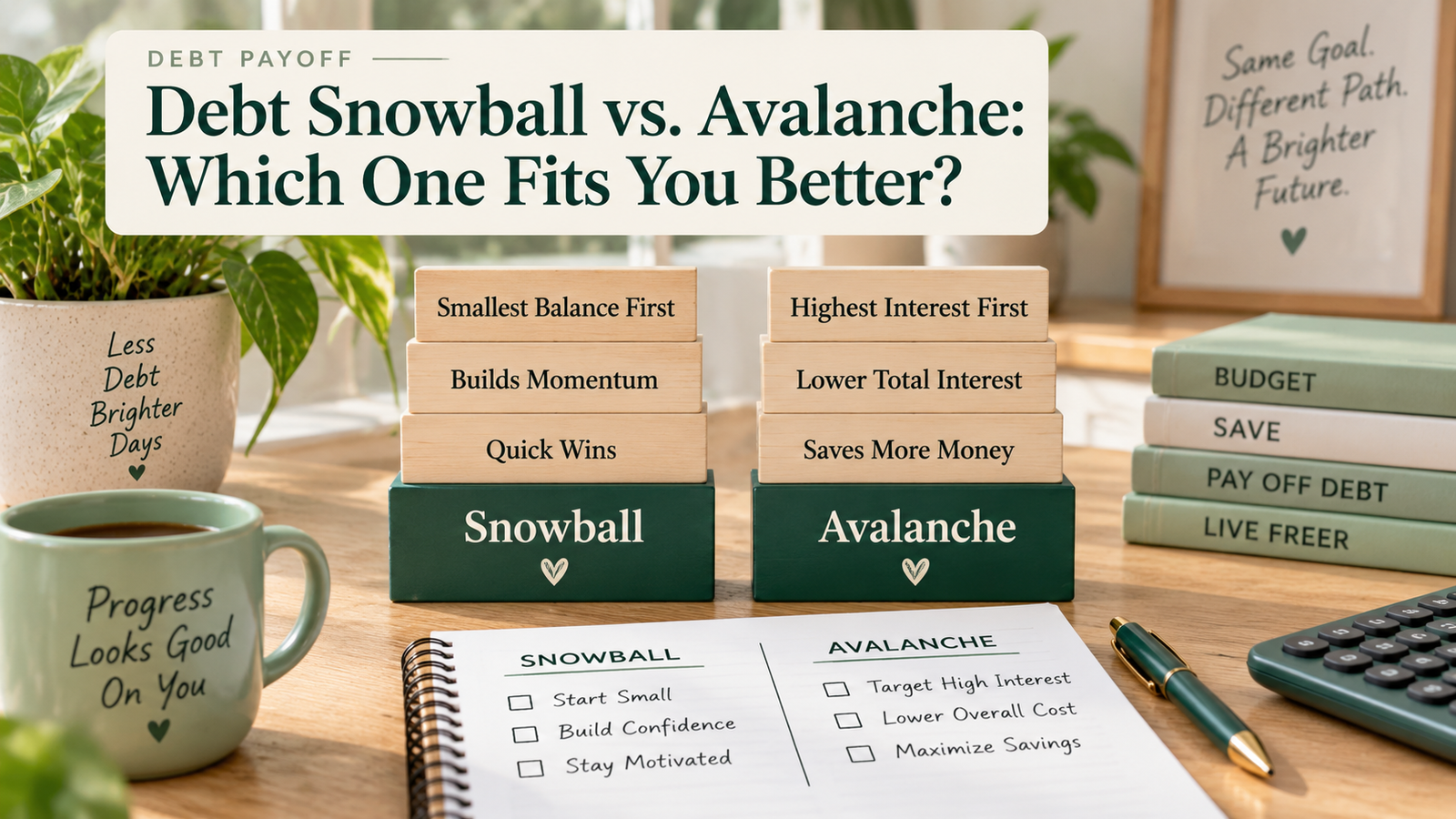
Debt Snowball vs. Avalanche: Which One Fits You Better?
Two of the most common debt-payoff strategies use the same basic idea: make minimum payments on everything, then throw your extra money at one debt at a time.
The difference is simply which debt you attack first.
How the debt snowball works
With the debt snowball, you list your debts from the smallest balance to the largest balance.
You make the minimum payment on every debt, then send all available extra money toward the smallest balance.
Once that debt is gone, you roll the payment you were making into the next-smallest balance.
Smallest balance → next-smallest balance → next-smallest balance → largest balance
Why people like the snowball
The biggest advantage is psychological. Paying off a small balance can create an early win, and early wins can make it easier to stay motivated.
If you tend to lose momentum when progress feels slow, that feeling of finishing an account may matter more to you than squeezing every possible dollar out of the math.
How the debt avalanche works
The debt avalanche organizes your debts by interest rate rather than balance.
You make minimum payments on everything and put your extra money toward the debt charging the highest interest rate.
Highest interest rate → next-highest interest rate → next-highest interest rate → lowest interest rate
Why people like the avalanche
The avalanche generally focuses on reducing the most expensive debt first.
If your highest-interest balance is large, though, it may take longer before you completely eliminate your first account.
A simple example
Imagine you have three debts:
- $750 at 12%
- $3,500 at 24%
- $8,000 at 7%
The snowball would start with the $750 balance because it is the smallest.
The avalanche would start with the $3,500 balance because it carries the highest interest rate.
Which method is easier to stick with?
That depends on you.
If seeing accounts disappear quickly keeps you motivated, the snowball may feel more satisfying.
If you are motivated by interest savings and do not mind waiting longer for the first payoff, the avalanche may feel more logical.
You can also use a hybrid
There is no rule saying you have to follow either system perfectly.
You might knock out one tiny balance first, then switch to the highest-interest debt. Or you might prioritize a debt that creates the most stress, frees up a large monthly payment, or needs to be handled before a promotional rate expires.
Before sending every extra dollar to debt
Make sure you can still cover your essential bills and unexpected expenses. A payoff plan becomes harder to maintain if every minor emergency forces you to borrow again.
What matters most is the direction
Both methods are designed to help you stop spreading extra payments thinly across several accounts and focus your money more deliberately.
Choose the order you can maintain, keep making progress, and adjust when your circumstances change.
Frequently Asked Questions
What is the debt snowball method?
The debt snowball targets the smallest balance first while you continue making minimum payments on your other debts.
What is the debt avalanche method?
The debt avalanche targets the debt with the highest interest rate first.
Can I switch debt payoff methods later?
Yes. Your payoff method is a tool, not a permanent commitment.
Make your debt payoff fit your real budget
Before deciding how much extra you can send toward debt, read Build a Budget That Actually Works for Your Real Life and 15 Monthly Bills Worth Reviewing This Weekend .